DYCI for Sustainability
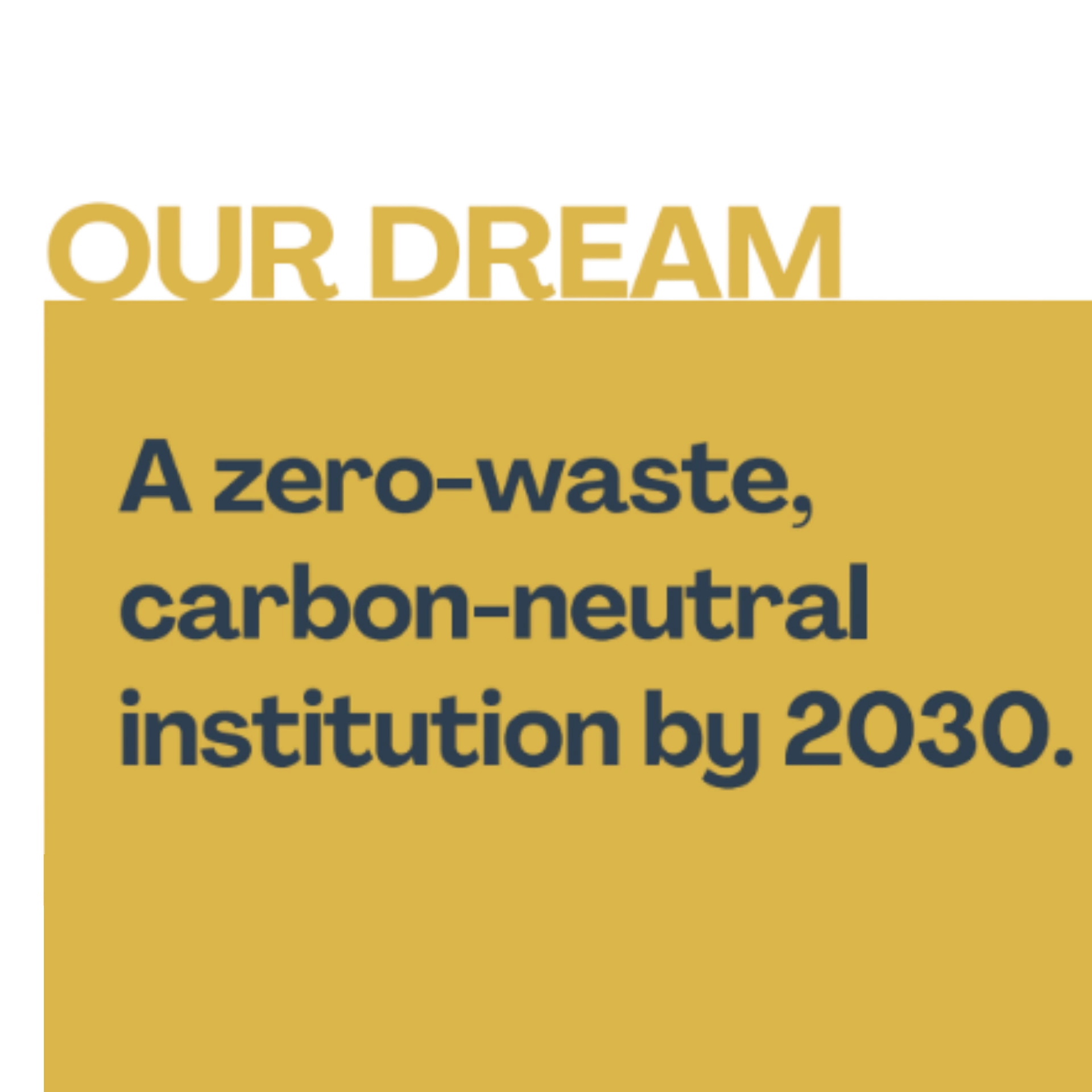
The DYCI for Sustainability initiative reflects Dr. Yanga’s Colleges, Inc.’s commitment to building a greener, more responsible future through education, innovation, and community engagement. Guided by its 2030 vision of becoming a zero-waste, carbon-neutral institution, DYCI integrates sustainable practices across campus operations, academic programs, and student-led initiatives—empowering the entire community to take part in meaningful environmental action.
A zero-waste, carbon-neutral institution by 2030.
DYCI Sustainability Office
The DYCI Sustainability Office leads the institutional efforts of Dr. Yanga’s Colleges, Inc. toward becoming a green and smart campus. Guided by the United Nations Sustainable Development Goals, the office is committed to implementing a comprehensive sustainability action plan that integrates environmental, academic, and community priorities. By 2025, it aims to establish campus-wide sustainability policies and by 2030, to transform DYCI into a zero-waste and carbon-neutral academic institution — setting a national benchmark for sustainability in Philippine higher education.
2026 UI GreenMetric World University Rankings
Ranking of Dr. Yanga's Colleges Inc. on Sustainability
World
Asia
Philippines
Energy and Climate (PH)
Transportation
Our Seven Strategies
The Sustainability Action Plan turns the 2030 goal into seven strategies, each with activities and indicators the office monitors through the school year.
- 01
Enhance Sustainability in Education
Rethink how teaching uses paper, plastic and energy: double-sided and practical exams, refillable markers, reusable PE uniforms, a campus waste plan, and GREEN Scholars funded by sustainable projects.
- 02
Elevate Environmental Stewardship
Declare DYCI a green campus, mark its trees and wildlife with QR-coded wooden signs, use the grounds as a living laboratory, and open bike and walking routes at the Elida Campus.
- 03
Enable Sustainable Food Systems
Cut single-use plastics in canteens, offer free water refilling, compost food waste into fertilizer, and grow fresh food in an orchard at the Elida Campus.
- 04
Establish an Energy Transition Plan
Measure how the campus uses energy, build on DYCI's investment in solar power, set conservation policies, and plan the move to 100% renewable energy.
- 05
Encourage Research & Innovation
Make sustainability a research priority with CREDO and SCIRE, publish student and faculty studies on the SDGs, and help fund youth-led ideas.
- 06
Empower Communities for Resilience
Move every DYCIan from awareness to action to collaboration, then carry that work into partner communities through programs like Project BANYUHAY.
- 07
Enact an Institutional Policy
Co-design a campus sustainability handbook with every stakeholder, backed by a monitoring system that tracks progress and keeps the plan honest.
Beyond the 3Rs
DYCI's waste plan goes past Reduce, Reuse, Recycle. The 8Rs model keeps materials in use for as long as possible and out of the landfill.
- 01
Rethink
Question whether we need it at all.
- 02
Refuse
Say no to single-use and avoidable waste.
- 03
Reduce
Use less paper, plastic and energy.
- 04
Repair
Fix appliances and devices before replacing them.
- 05
Reuse
Bring your own baunan, tumbler and eco-bag.
- 06
Rot
Compost food waste into organic fertilizer.
- 07
Refill / Repurpose
Refill markers, soap and water; give old things new uses.
- 08
Recycle
Segregate paper, cans, bottles, hazardous and food waste.
Already
In Motion.
- GREEN Month (Global Rebirth through Everyday Efforts for Nature) was held for the first time in October 2023.
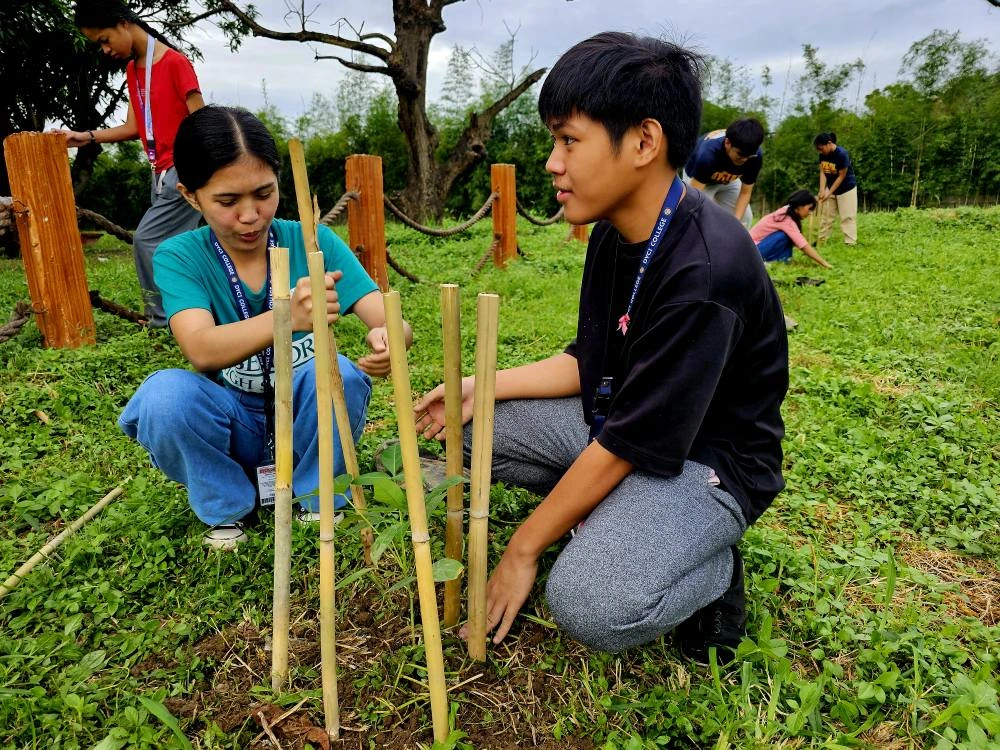
- A living laboratory: in A.Y. 2023–2024, Grade 11 STEM students surveyed the wildlife on campus for General Biology 2, including a roost of Peter's fruit bats.
- Tree walks introduced students to the campus's local trees and their value to people and biodiversity.
- Project BANYUHAY, DYCI's flagship community engagement program, brings sustainability work to local communities.
- BYOB Project by DYCI SIBOL encourages DYCIans to bring their own baunan and tumblers instead of plastic.
- Solar power: DYCI has begun investing in solar energy on campus.
- Email deletion drive: college students cleared old emails to cut the energy used by cloud storage.
- Sustainability Green Department Award (April 2026) for the ALAB Research Summit 2026.
DYCI Sustainability Initiatives
The DYCI's Sustainability program is committed to promoting sustainable practices and environmental stewardship within the community. Through various initiatives, we aim to reduce our carbon footprint, promote renewable energy, and encourage sustainable living.
Our team works on projects that focus on waste reduction, energy efficiency, and community education. We believe that by working together, we can create a more sustainable future for all. Join us in our efforts to make a positive impact on the environment and promote sustainability in our community. Together, we can make a difference.
Sustainable Development Goals at DYCI
Anchored on the United Nations Sustainable Development Goals (SDGs 1–17), the 2030 Sustainability Action Plan unites environmental stewardship, academic innovation, and community engagement into a single framework. By 2025, DYCI will formalize campus-wide sustainability policies, and by 2030, it envisions a zero-waste, carbon-neutral academic institution — setting a benchmark for sustainability in Philippine education.
By aligning with the SDGs, DYCI commits to:
- No Poverty and Zero Hunger (SDGs 1–2): supporting student access and creating self-sustaining food systems.
- Good Health, Quality Education, and Gender Equality (SDGs 3–5): ensuring a healthy, inclusive, and equitable learning environment.
- Clean Water, Clean Energy, and Economic Growth (SDGs 6–8): building resilient systems for resources, energy, and livelihoods.
- Innovation, Equality, and Sustainable Communities (SDGs 9–11): designing a campus that models sustainability in infrastructure and access.
- Responsible Consumption, Climate Action, and Ecosystem Protection (SDGs 12–15): fostering circular practices and ecological stewardship on land and sea.
- Strong Institutions and Partnerships (SDGs 16–17): promoting transparency, accountability, and collaboration at every level.
Sustainability Documents
Article News